Specify anodizing thickness for outdoor aluminium profiles loosely and two suppliers can quote the same section, then deliver surfaces that age completely differently within three years. Coating thickness is the number that decides how long an anodized profile survives UV, salt spray and cleaning chemicals, and it is the easiest requirement to verify when goods arrive.
Why the thickness figure matters more than the finish name
Anodizing grows an oxide layer out of the aluminium itself, so it cannot peel like paint. What it can do is thin out. A 5 micron decorative layer is fine inside an enclosure; on a facade mullion, an outdoor heat sink or a coastal installation it wears through at cut edges and fixing points, and once the barrier is broken the profile starts to pit. Outdoor specifications therefore move in one direction: thicker coating, properly sealed.
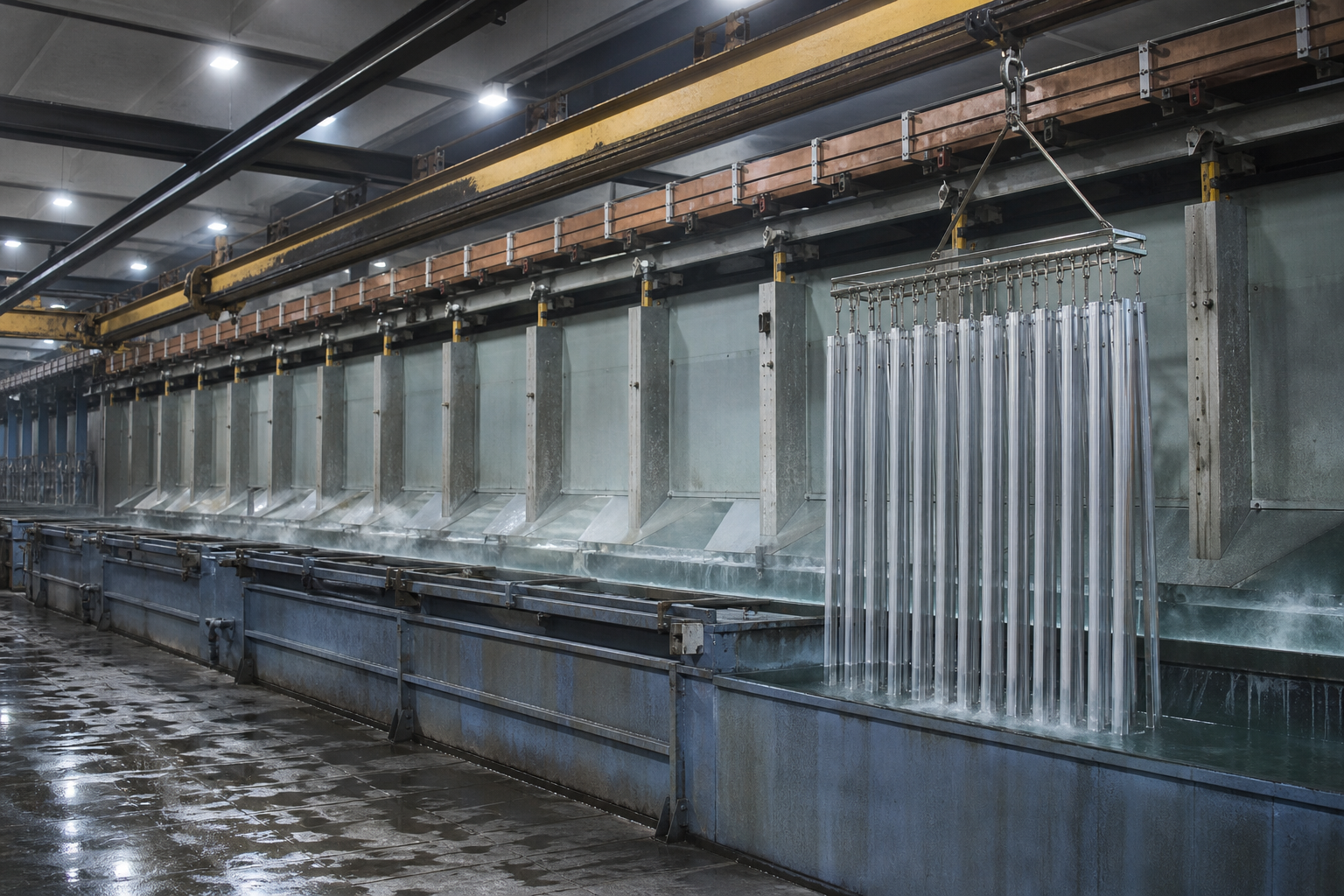
Reading the class designations: AA15, AA20 and AA25
International anodizing standards describe the coating with a class number equal to the minimum local thickness in microns, not an average. AA15 is common for interior and sheltered parts, AA20 is the usual baseline for exterior architectural work in mild environments, and AA25 is specified where salt, pollution or aggressive cleaning is expected. Always ask for minimum local thickness, because an average measurement hides thin spots on radii and inside slots.
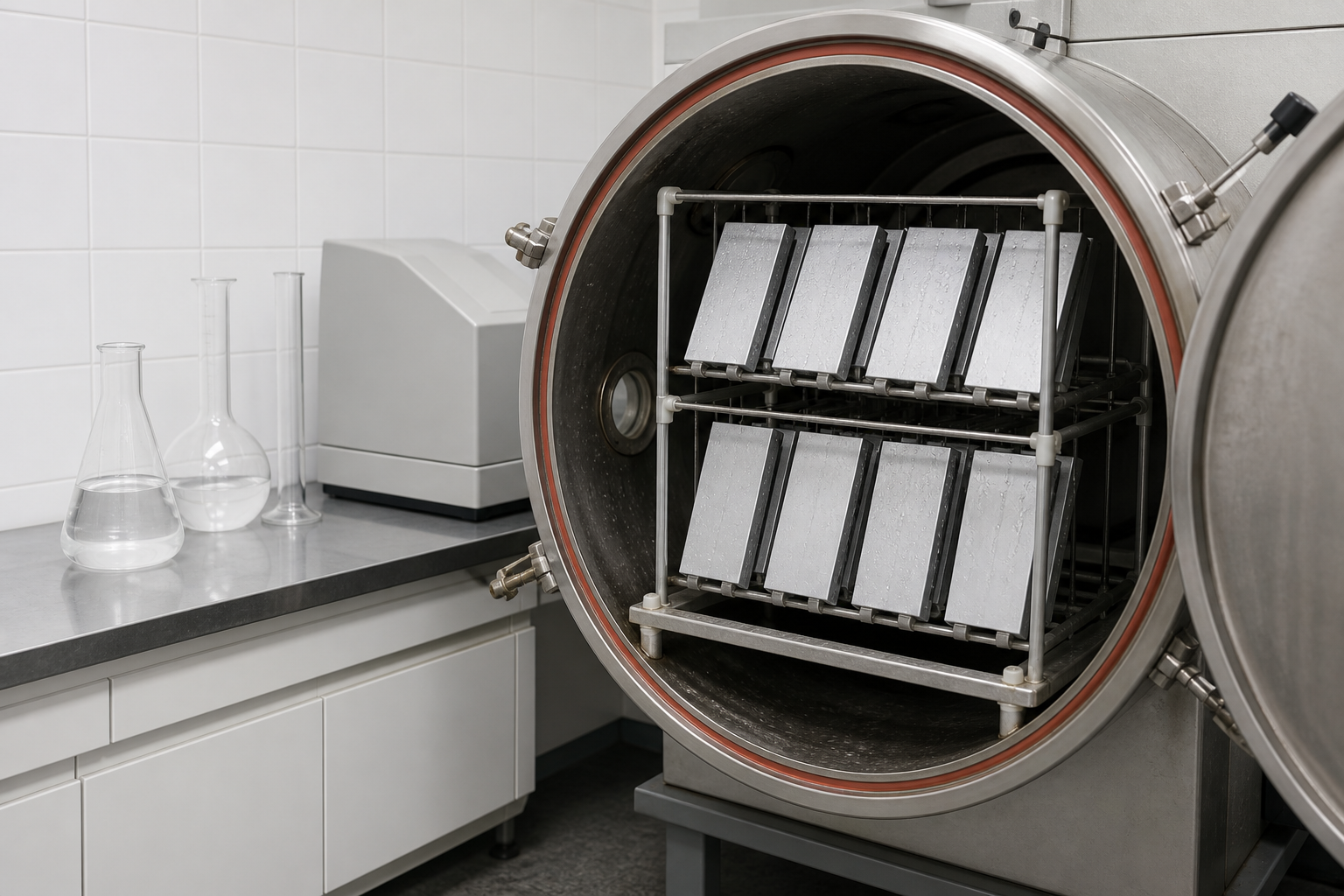
Seal quality and colour retention
Thickness without sealing is a porous coating. Sealing closes the pores of the oxide layer; a poorly sealed profile looks correct on delivery and then absorbs dye, chalk and grime on site. Two checks belong in the purchase order: a seal-quality test such as a dye stain or acid dissolution check, and a salt-spray result written as hours to first pitting rather than a pass or fail tick.
What to put on the drawing
Five lines are enough to avoid disputes: alloy and temper, anodizing class with minimum local thickness, colour or finish, seal-quality test method with acceptance criteria, and salt-spray hours. Add coated-thickness measuring points along the extrusion so the same positions are checked on every shipment.
Specifying anodized profiles with Siken Aluminum
Send us your section drawing together with the exposure class, and we confirm alloy, temper, anodizing class, sealing and packing in one quotation, with first-article inspection before the production run.
Email: info@sikenalshop.com
WhatsApp: +86 137 8080 0864
sikenalshop.com