Specifying a curved aluminium profile is where many projects stall. A section that extrudes perfectly straight can crack or collapse the moment it is formed, and the number that decides the outcome is the minimum bend radius for aluminium extrusions — the tightest arc the profile can take before it fails.
Why Bend Radius Is a Design Decision, Not a Shop Detail
Bend radius belongs on the drawing next to the alloy and the temper, because it drives process choice, tooling and price. Leave it to the fabricator and you inherit whatever the press can manage; define it, and the arc you get becomes predictable.
What Sets the Minimum Bend Radius
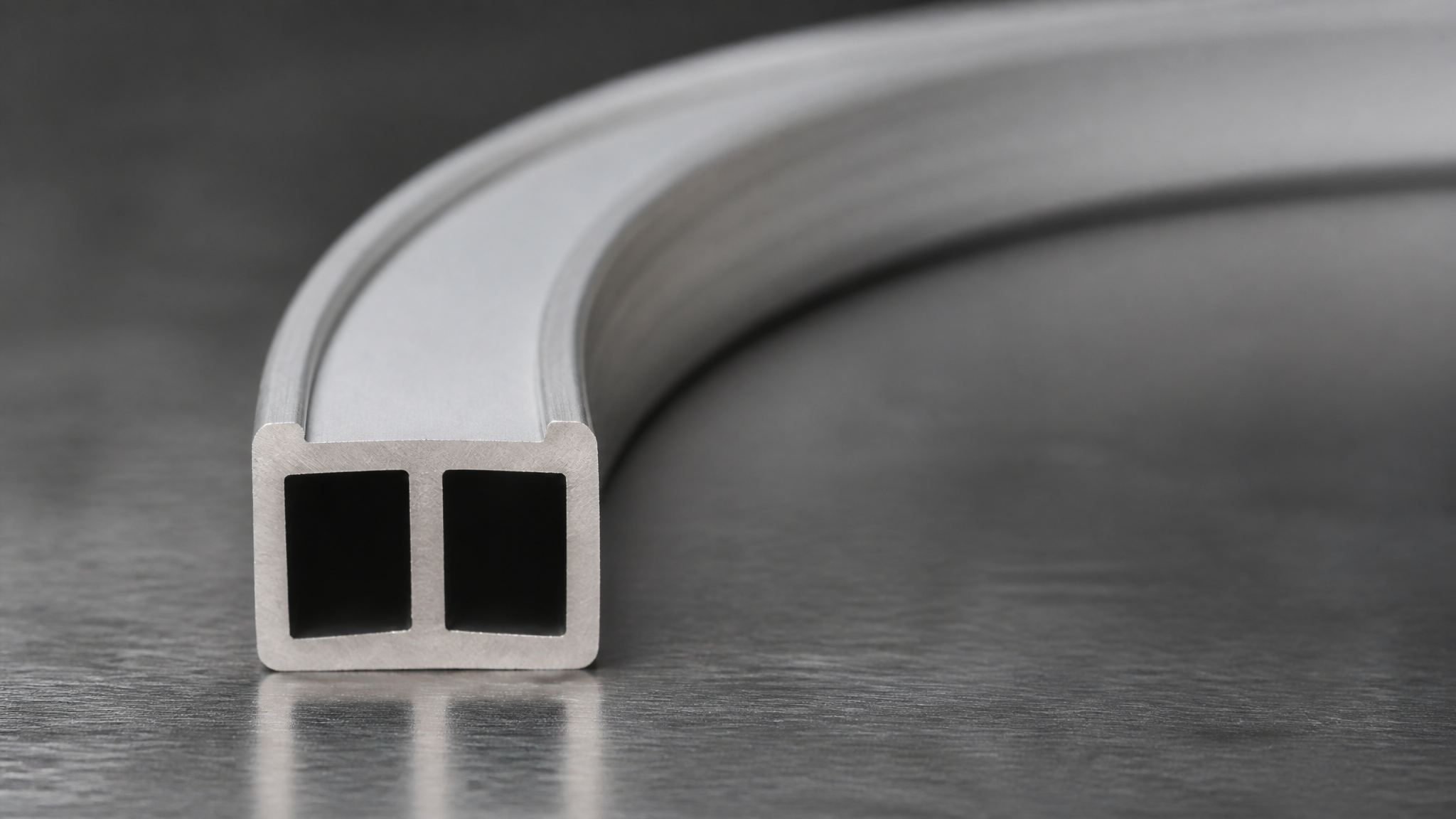
Four factors set the practical limit: wall thickness across the section, the geometry of the hollow, the alloy and temper, and the forming process itself. Thin outer walls buckle before thick ones, and T6 profiles bend less before cracking than softer tempers. As a working rule, treat a radius of two to three times the profile height as the point where a mandrel or a dedicated die becomes necessary.
Roll Bending, Press Bending and Stretch Forming
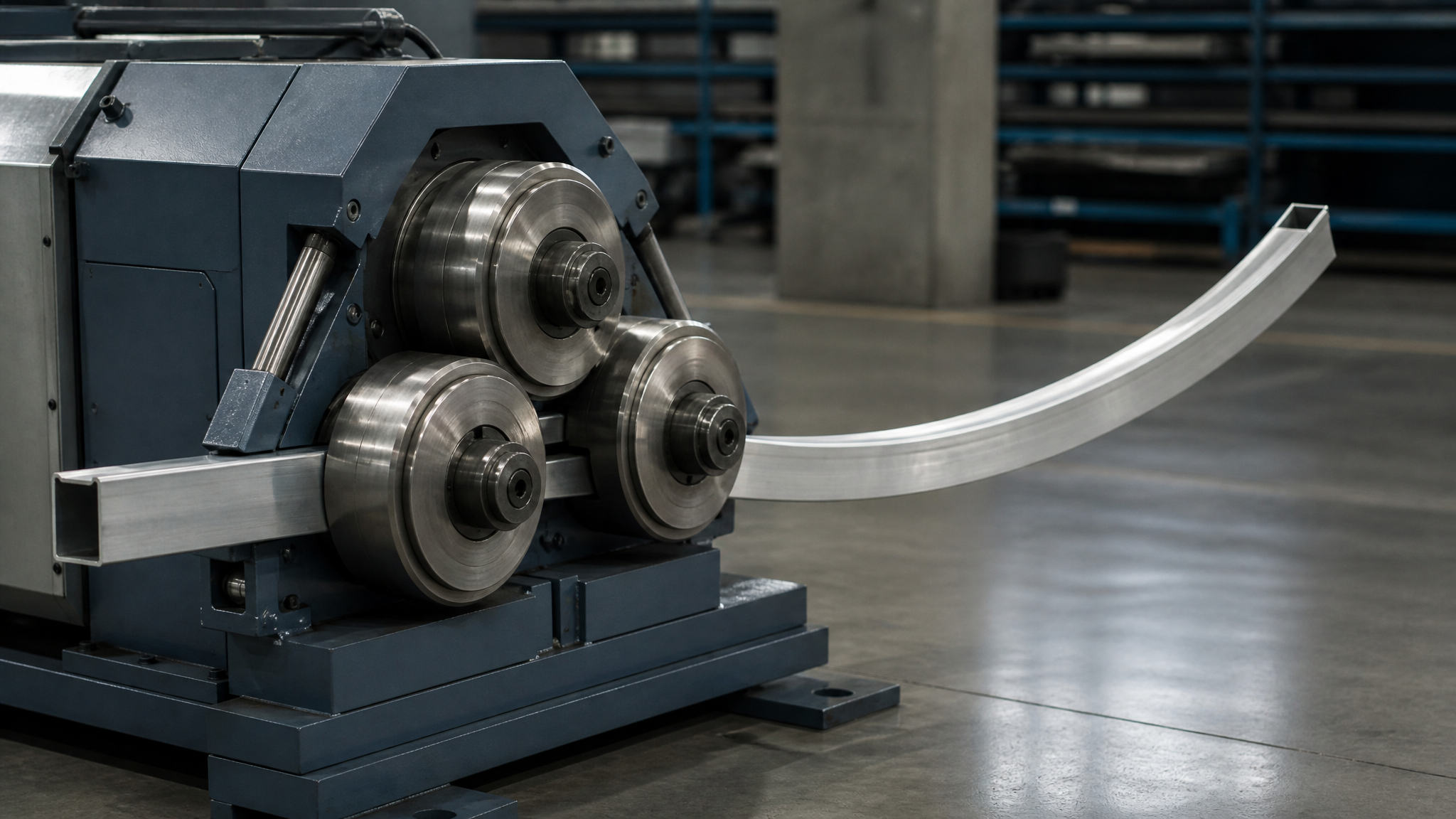
Roll bending — passing the extrusion through a three-roll set — makes smooth large-radius arcs on long lengths. Press bending forces the profile against a die for tighter radii over shorter lengths and needs a mandrel inside hollow sections. Stretch forming pulls the profile around a form block under tension and holds the cross-section most accurately.
Temper, Alloy and Wall Thickness
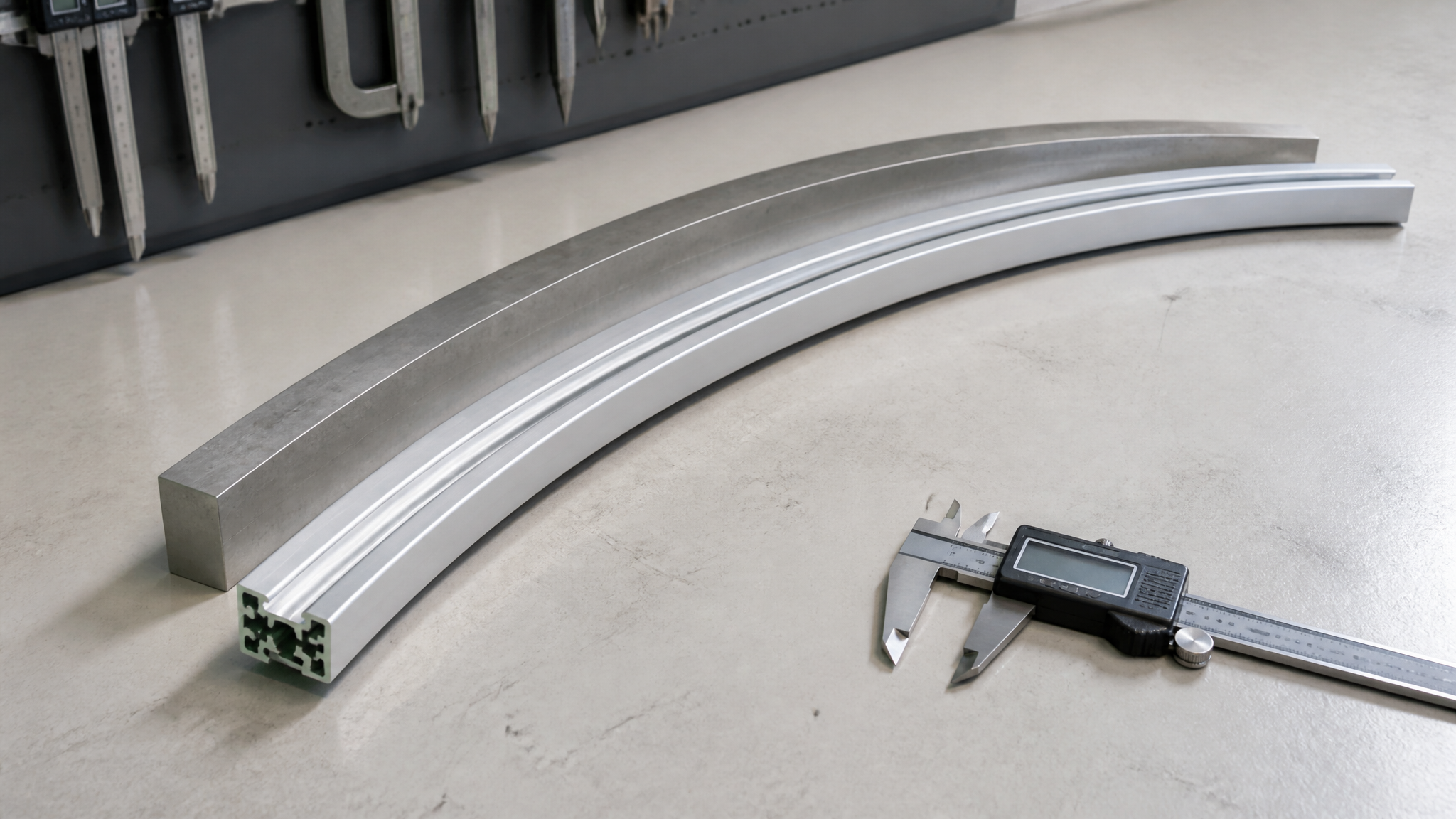
6063-T5 tolerates tighter arcs than 6063-T6 because it carries more ductility. Where a design needs both a tight radius and high strength, the usual answer is to bend in T5 and age to T6 afterwards. Keep wall thickness uniform along the arc and avoid sharp outside corners, which concentrate strain.
What to Put on the Drawing
Put the arc radius and its centre, the bend line, the tolerated distortion of the cross-section and the datum faces that must stay flat on the drawing. State whether forming happens before or after ageing, because forming after anodising will craze the coating. Siken Aluminum extrudes, bends and machines profiles under one roof and reviews drawings for formability before tooling is committed — send us your section and the arc you need.
Email info@sikenalshop.com | WhatsApp +86 137 8080 0864 | sikenalshop.com