Every extrusion quotation rests on one number: aluminium profile weight per metre. Price per kilogram, freight class and the load a frame can carry all follow from it, so a buyer who can calculate it independently negotiates from a stronger position.
Why Profile Weight Drives the Whole Quotation
Extruders sell by weight, not by length. Two profiles of identical length can differ threefold in mass, so a profile that looks cheap per metre can still be expensive per kilogram. Weight also sets shipping cost, since freight is charged on gross mass including packaging.
The Formula: Cross-Section Area x Alloy Density
Take the cross-sectional area from the drawing in square millimetres and multiply it by the density of the alloy. For the 6xxx family, including 6060, 6063, 6005A and 6061, the working figure is 2.70 grams per cubic centimetre. In practice: kilograms per metre = area in square millimetres x 0.0027. A profile with 800 square millimetres of section weighs about 2.16 kilograms per metre. Hollow, finned and multi-cavity profiles use the same method; the area is the sum of every wall in the section.
Theoretical Weight vs Actual Weight
The drawing figure is theoretical. Wall thickness tolerance, corner radii, die wear and the metal the press pushes into the bearing area all shift the real number, and the permitted difference is defined in the tolerances agreed with your supplier. Confirm whether a quoted weight is theoretical or actual, because the gap is billed to somebody.
Checking Weight Before the Container Loads
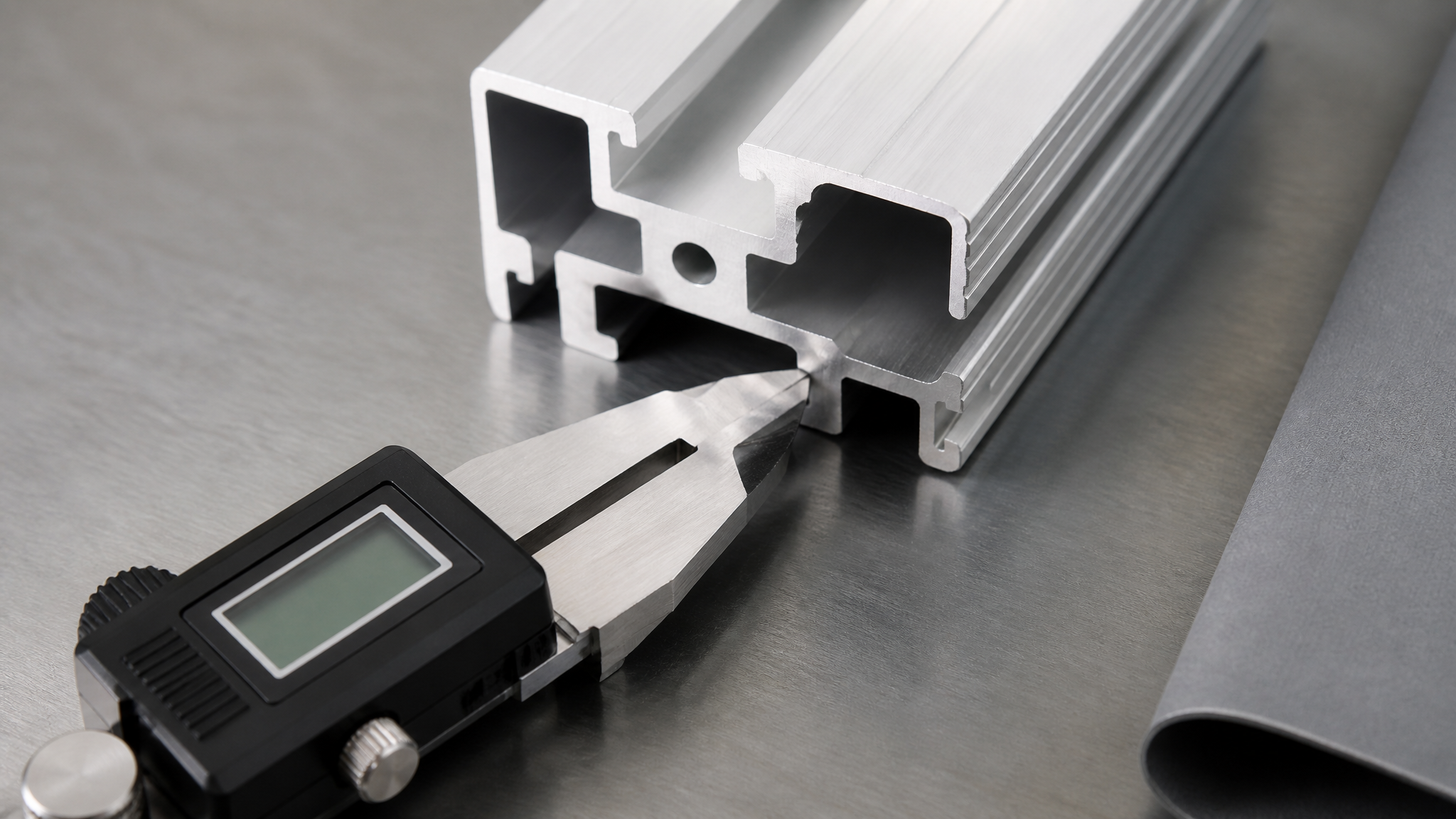
Ask for a first-article weight check on a known length: weigh a cut sample and divide by its measured length. This test catches die drift, the wrong billet alloy and unapproved substitution before the shipment leaves the plant, and proves that a lower price per kilogram has not been offset by extra material.
From Weight to Price, Freight and Load
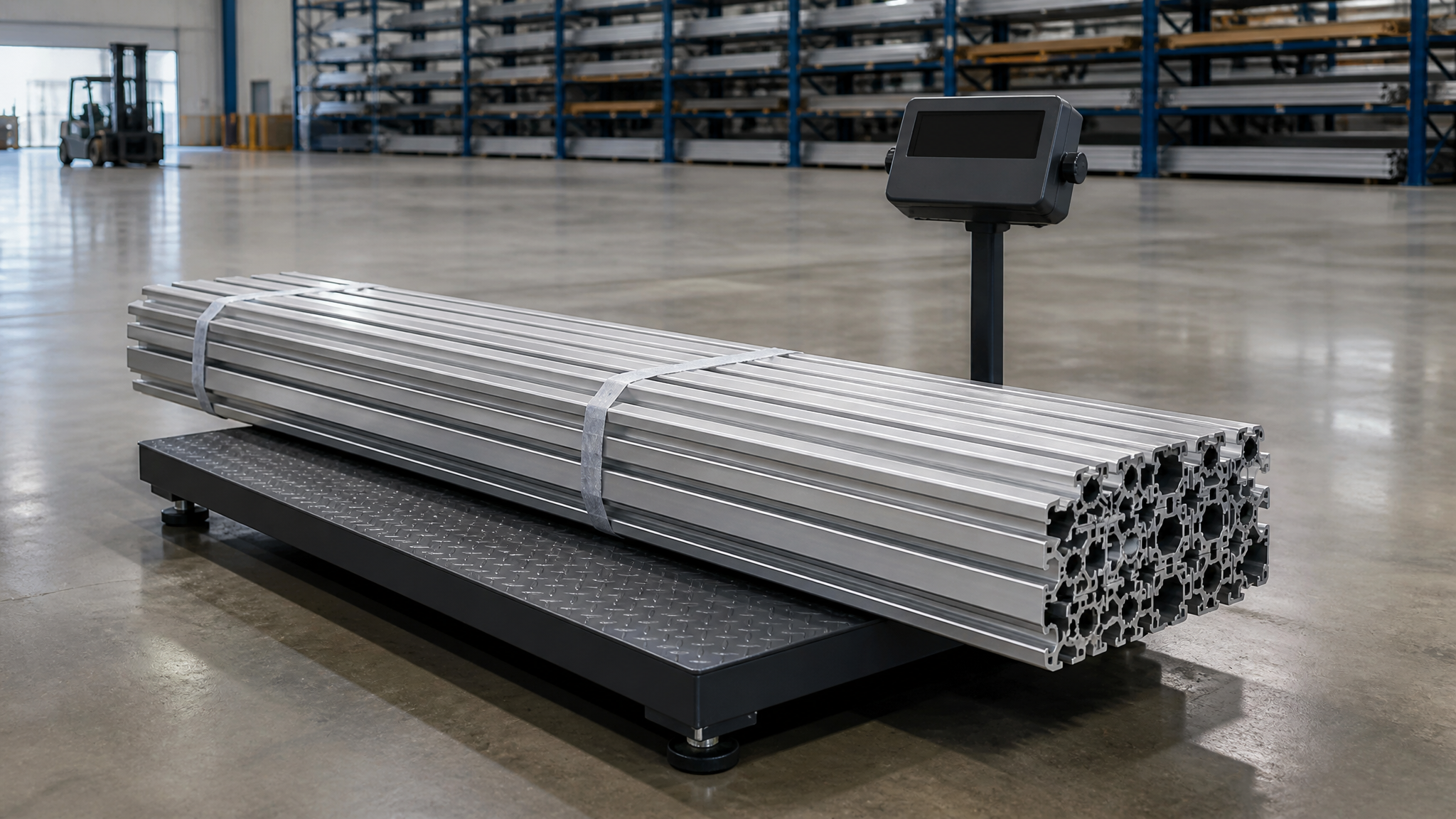
Once kilograms per metre are known, the rest is arithmetic. Multiply by total metres for order weight, apply the agreed per-kilogram rate, then add conversion and finishing charges. The same figure feeds structural checks, deflection calculations and pallet planning, and it avoids the most expensive surprise in extrusion sourcing: a profile that is correct on paper but heavier in the crate.
Contact us: Email info@sikenalshop.com | WhatsApp +86 137 8080 0864 | sikenalshop.com